

Zechariah is offering incense in the Temple when Gabriel tells him that Elizabeth will bear a son named John. In Luke 1:5–23, the angel’s message interrupts a familiar priestly duty. The people waiting outside see the effect of the encounter only when Zechariah emerges unable to speak.
These ten AI-created works interpret the announcement through differences in architecture, light and gesture. Start with the altar, then compare how much of the setting each design lets you see.
1. The Sign in the Tall Sanctuary

The height of the sanctuary makes the figures appear small within a large stone interior. Start with the two faces before following the vertical lines. A tall print keeps that relationship visible from across the room.
2. The Annunciation at the Temple Threshold
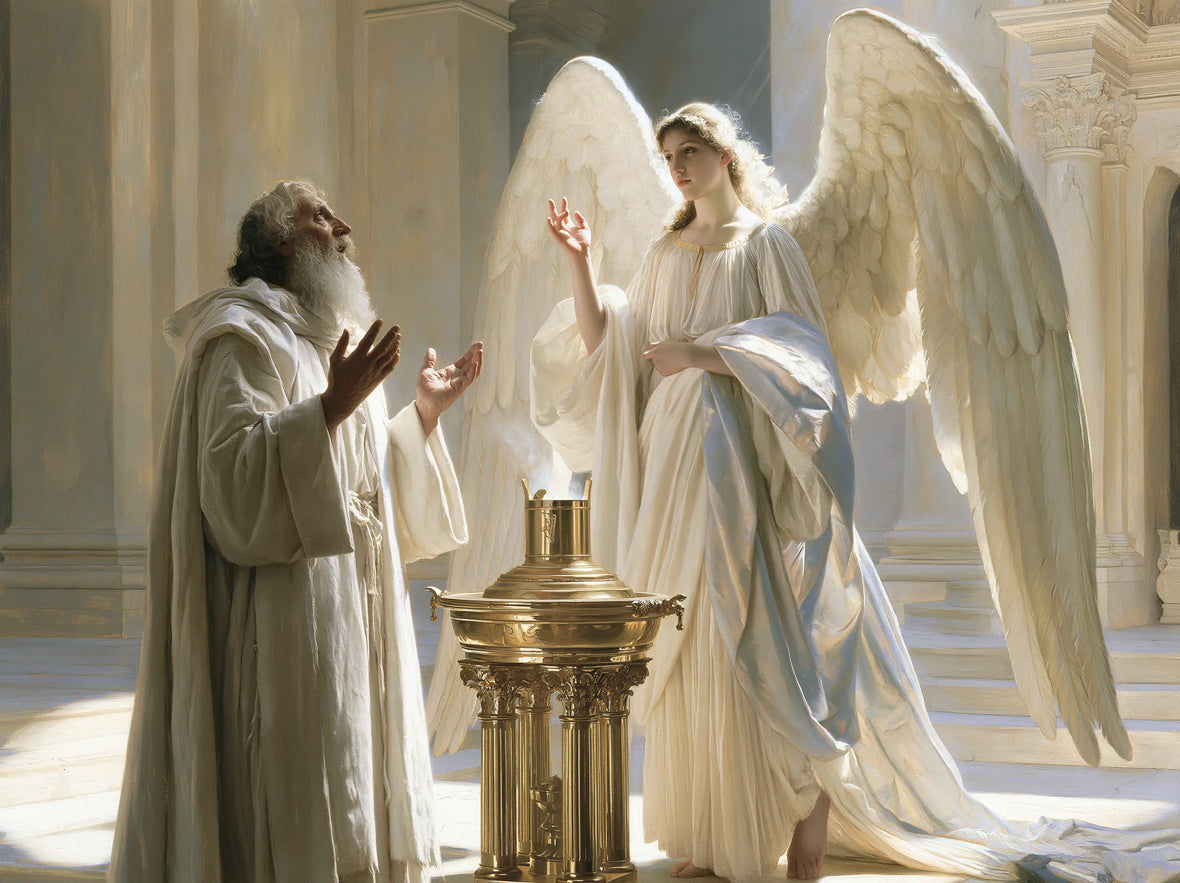
A threshold distinguishes the place of service from the space beyond it. The composition uses that boundary to mark a transition from familiar ritual to an unexpected encounter. In Luke, the people wait outside while Zechariah offers incense.
3. The Angel above the Incense Altar

Luke specifies that the angel stood on the right side of the altar of incense. Compare where the angel appears relative to the altar here and in the other versions. Orientation also depends on whose viewpoint the artist chooses.
4. The Elder Priest before the Messenger
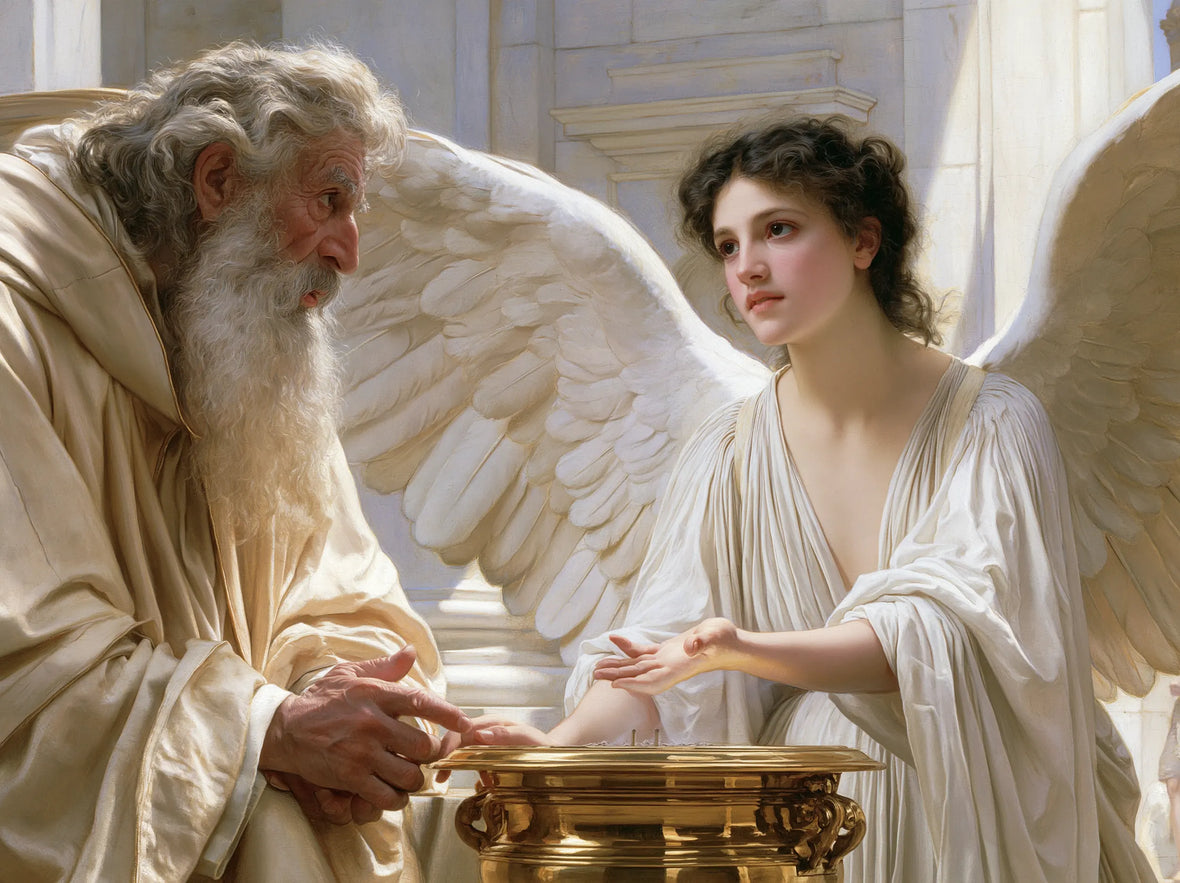
The encounter reads through the age and posture of the priest and the presence of the messenger. Look at the interval between them. A smaller print suits an intimate scene if there is enough space to read both faces.
5. The Light between the Temple Columns
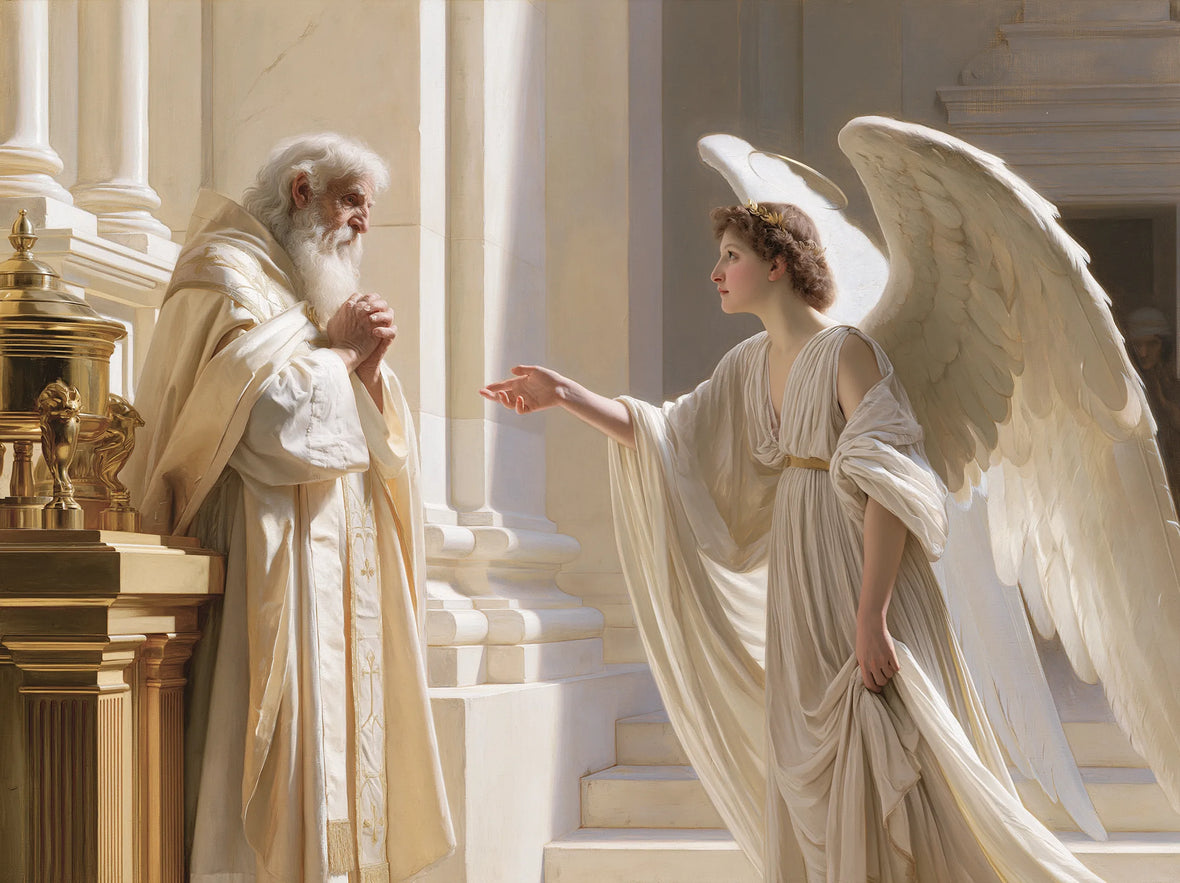
The columns make light visible by dividing it into alternating bright and shaded areas. Follow those changes toward the figures. A wider display gives the architectural setting room to carry part of the story.
6. The Temple Encounter beneath White Marble

Pale stone gives the figures a brighter setting than the darker altar scenes. Notice whether your eye first registers the architecture or the angel. That choice affects how immediately the encounter reads.
7. The Message beside the Golden Altar

The altar gives Gabriel’s message a place in the priest’s ordinary duties. Begin by finding the point where the eye moves from the gold into the space between the figures. Warm tones can help that transition stay clear on a softly lit wall.
8. The Raised Hand in the Temple

A raised hand is one way to render speech in a still picture. Compare the speaker’s gesture with Zechariah’s response. The image can suggest the exchange even before the viewer knows the words of the angel.
9. The Raised Finger of the Messenger

Look at the pointing gesture, then at the object or figure toward which it seems to lead. It can suggest emphasis rather than identifying a destination. A print large enough to make the hands visible lets that detail do its work.
10. The Answer beside the Incense Bowl

The incense bowl anchors the scene in a particular task. Luke’s account then turns from the offering to a question and an answer. Compare the stillness of the vessel with the shifts in posture around it.
What does the altar tell you?
The incense altar establishes the setting and identifies Zechariah’s task. The angel’s position, the priest’s reaction and the people outside give artists three ways to signal what is happening. Gabriel announces John’s birth here. In the later Annunciation, he visits Mary with news of Jesus.
Choosing a print
A print centered on the faces and hands can be read at close range in a prayer or reading corner. An image with tall columns or a broad sanctuary benefits from enough space to see how the architecture frames the figures.