

In Luke 1:57–66, the birth of John the Baptist begins with a household rejoicing with Elizabeth. Neighbors and relatives gather again on the eighth day. When Zechariah writes that the child is to be named John, he regains his speech and blesses God.
These ten AI-created works focus on the child’s arrival. Each imagines the room, light and gestures around a few verses. Compare which pictures emphasize the parents, which bring the neighbors into the scene and how the artist keeps the child visible within each group.
1. The Quiet Chamber of Joy

The chamber is the scale of a family gathering. Look at the space just around the newborn and then at how far the room stays visible. That balance lets the scene feel intimate even when the print is displayed in a shared room.
2. The Parents in Pale Morning Light

Pale daylight draws attention to the two parents. Compare the space given to their faces with the small size of the infant. This is a way of showing a promise fulfilled through the responses of those who have waited for it.
3. The Joy beside the Open Window

An open window puts the chamber in contact with the world outside. Trace the light back from the people to the opening. A print with room for the full composition keeps that relationship clear.
4. The First Blessing
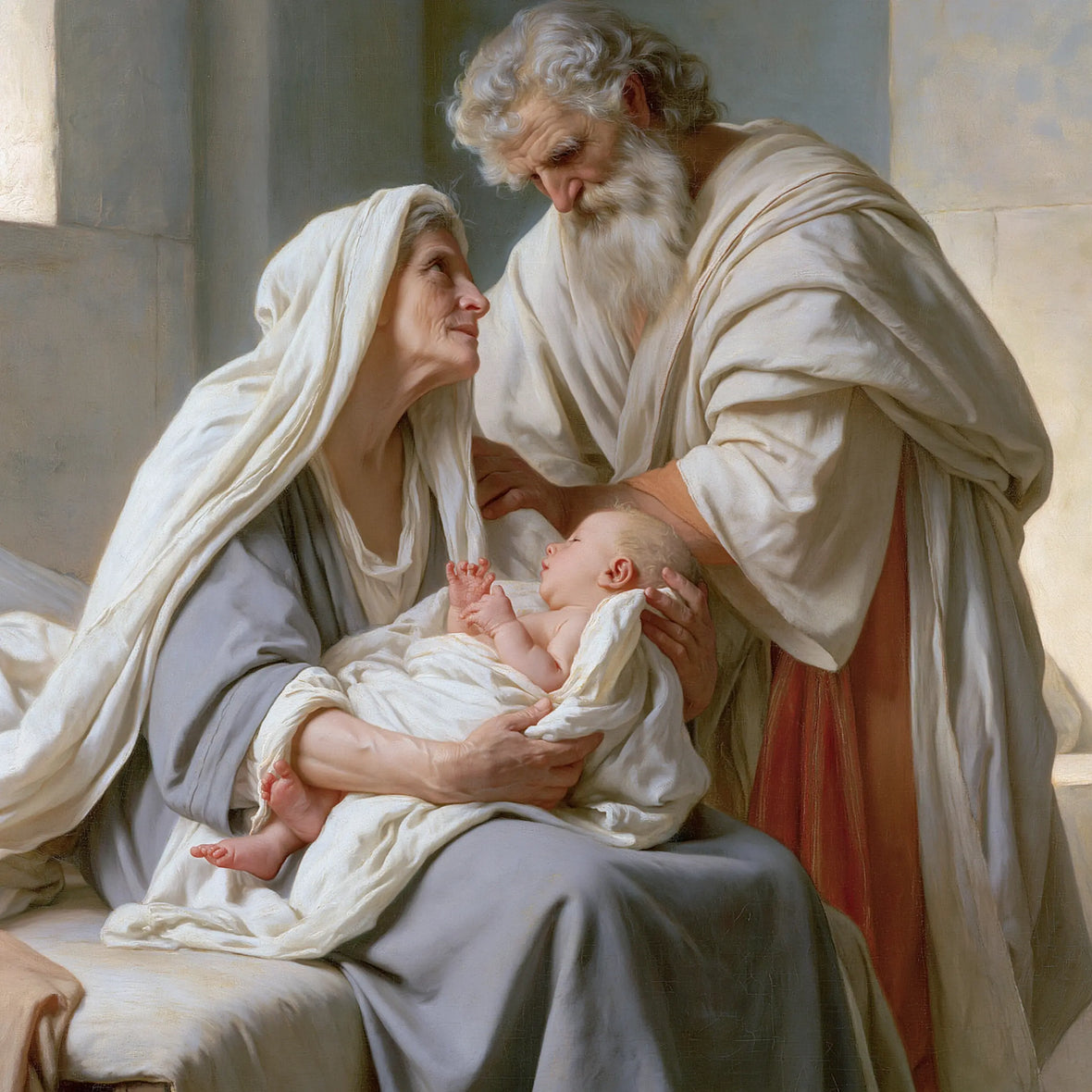
Begin with the gesture that suggests blessing, then look at how the other figures attend to it. Luke describes the neighbors and relatives rejoicing with Elizabeth. The painting imagines a gesture that makes their joy visible.
5. The Gaze of Recognition

Look at who looks at whom. A glance can tell you more about the center of the scene than the position of any one figure. Quiet facial expressions are best seen at the distance of a chair or bedside table.
6. The Child in Elizabeth's Arms

Elizabeth’s embrace gives the story its center. Compare the child’s small folds of cloth with the heavier shapes of the adult clothing. A matte surface lets you study those differences in a softly lit room.
7. The Neighbors Gather around Elizabeth

The group puts Luke’s neighbors and relatives in view. Follow the turn of the figures toward Elizabeth and the infant. The story grows from a moment of private relief into an event shared by a community.
8. The Joy of the Hill Country

Luke tells how word of the events spread through the hill country of Judea. The title evokes that wider setting. Notice how much space the artist gives the figures and how much is left for the world around them.
9. The Child in the Sunlit Room

The title gives the light a clear role. Watch which details become legible when you look from a few paces away. A sunny palette also gives the work a different presence than the quieter chamber scenes.
10. The Promise Shared with the Household

The household makes the promise a shared experience. Look for the balance between the child and the adults who witness his arrival. Leave enough room in the display to see the family grouping as a whole.
Why the birth and naming belong together
Elizabeth names the child John when the gathering expects a family name. Zechariah confirms it in writing, in keeping with the angel’s announcement earlier in the chapter. The name marks the fulfillment of that promise and leads into Zechariah’s blessing in Luke 1:67–79.
Choosing a print of the birth of John
Choose an intimate chamber scene for a place where you can see the faces up close. Give a larger family or neighborhood scene enough width to keep the figures distinct. Light from a nearby window can help a print read clearly, provided reflections do not obscure the smallest gestures.