

A scroll against an open sky presents Saint Paul as a writer. A small figure on a bright road recalls the moment he was interrupted on the way to Damascus. A book and a sword bring the apostle’s life and legacy together in an emblematic portrait.
These ten AI-generated artworks from Alpha Christian Art explore all three approaches. Use the details below to compare the subject, color and viewing distance before choosing an art print.
The road, the book and the sword
Acts 9 tells of a journey interrupted by light and a voice. Contemporary images can place the viewer on that road or evoke the experience through landscape and shadow. Other prints use the familiar book and sword of Saint Paul, drawing on his letters and the later tradition of his martyrdom.
The objects determine what the image asks you to contemplate. An open letter suggests the act of writing, while a closed book emphasizes Paul’s enduring teaching. A roadside vision asks you to consider the change that came before either.
1. The Red Mantle beneath the Grey Sky
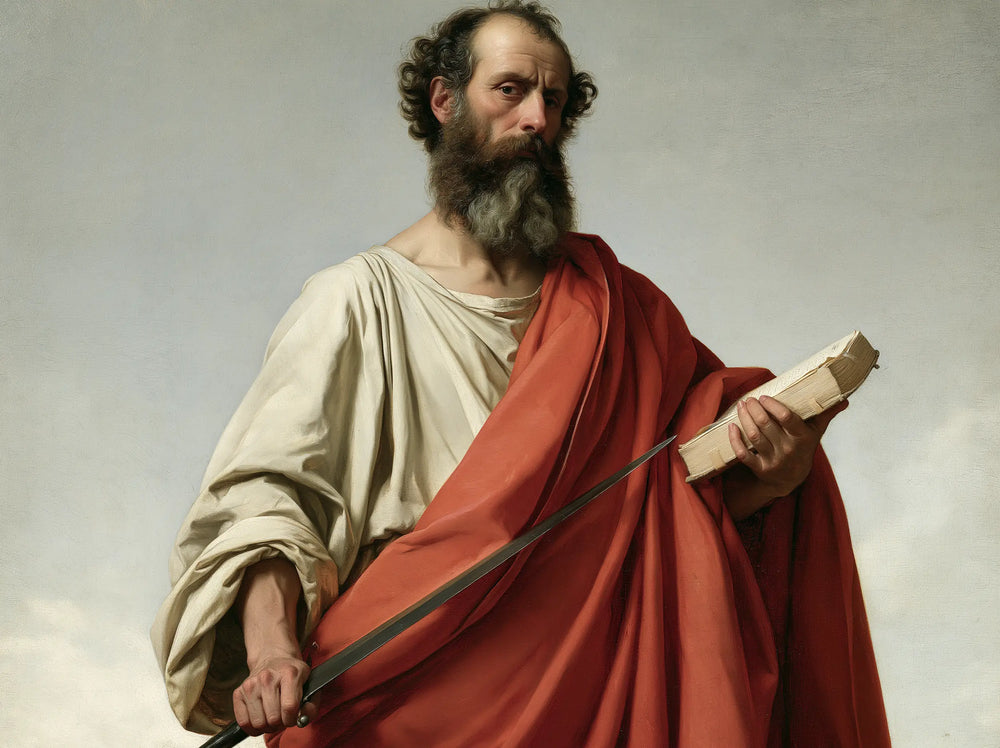
The warm mantle gives the apostle a strong outline against cooler weather. This combination works well when the print is seen from a distance, since the larger blocks of color remain distinct before the facial detail comes into view.
View this art print → →2. The Scroll beneath the Clouded Horizon
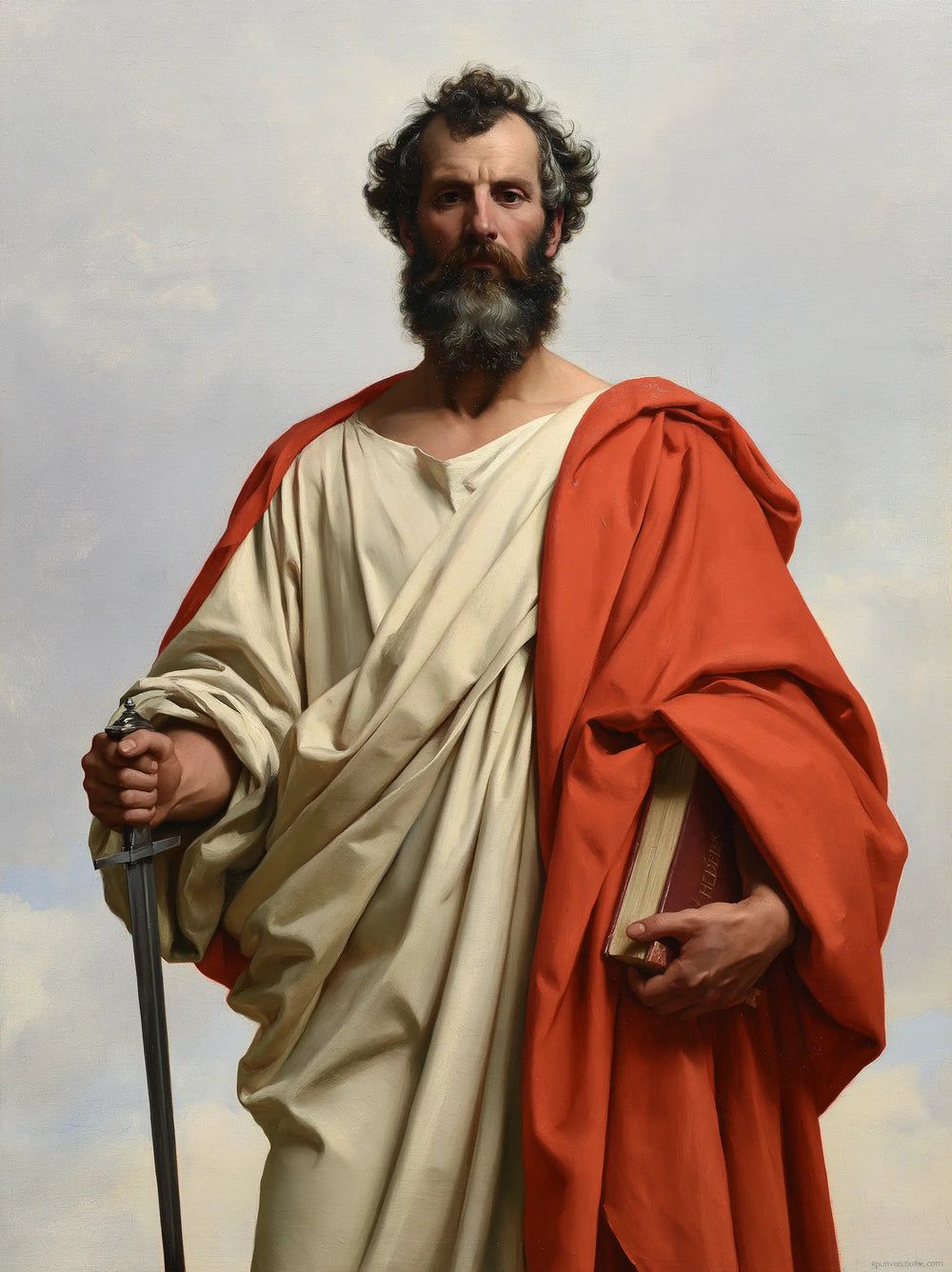
The scroll invites a reading of Paul as a writer. An open horizon gives the image a sense of travel, even as the apostle’s attention returns to a small object. A larger size will give the hands and material of the scroll more room to register.
View this art print → →3. The Sword beside the White Tunic

A pale garment gives the blade a different kind of contrast from a dark devotional portrait. Look for the way the clothes and the metal read side by side. A modest frame can keep their different textures in focus.
View this art print → →4. The Letter in the Morning Light
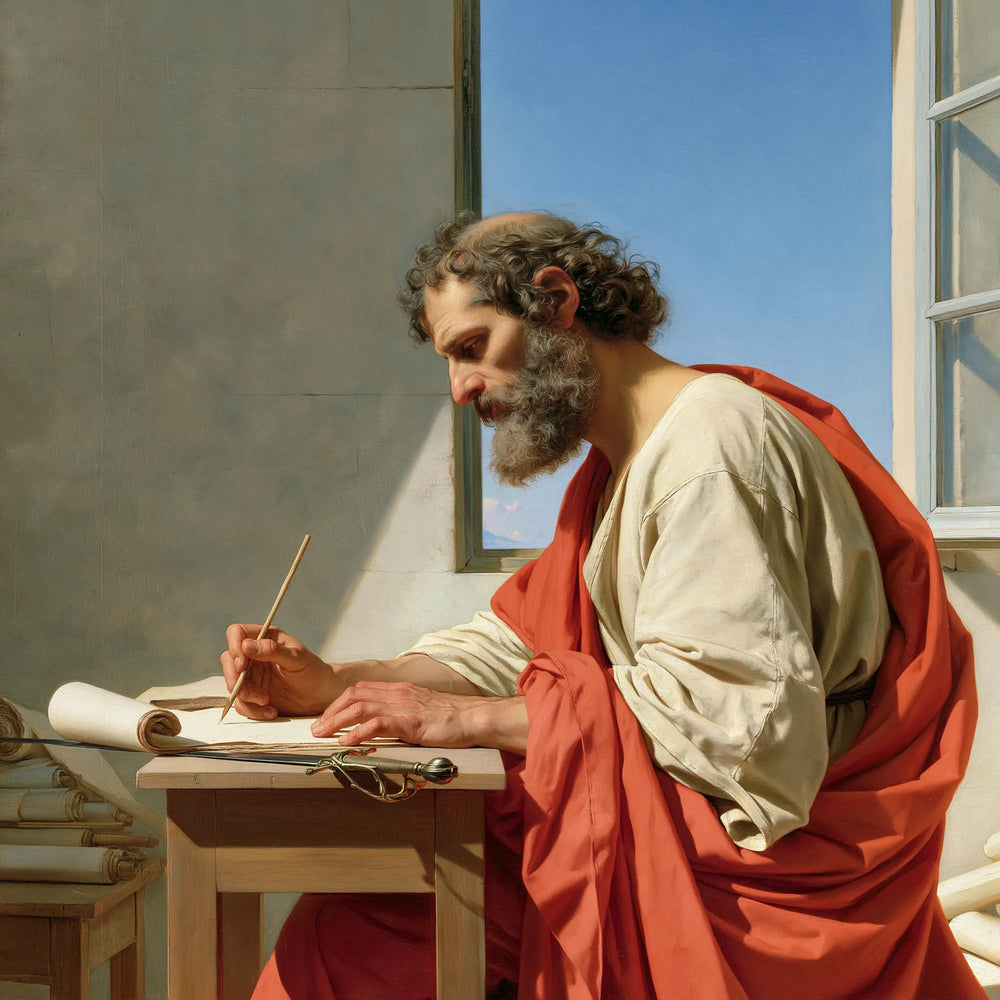
Morning light softens the portrait and brings writing into a quieter setting. This interpretation suits a reading corner where you can see the letter at close range. It is a useful comparison with the more public image of the apostle holding a sword.
View this art print → →5. The Blue Blade and the Golden Mantle

Cool metal and a warm mantle give the image its main contrast. A neutral wall allows those colors to define the picture. If you are choosing between sizes, look first at where the mantle and blade are easiest to distinguish.
View this art print → →6. The Roadside Vision beneath the Cypress
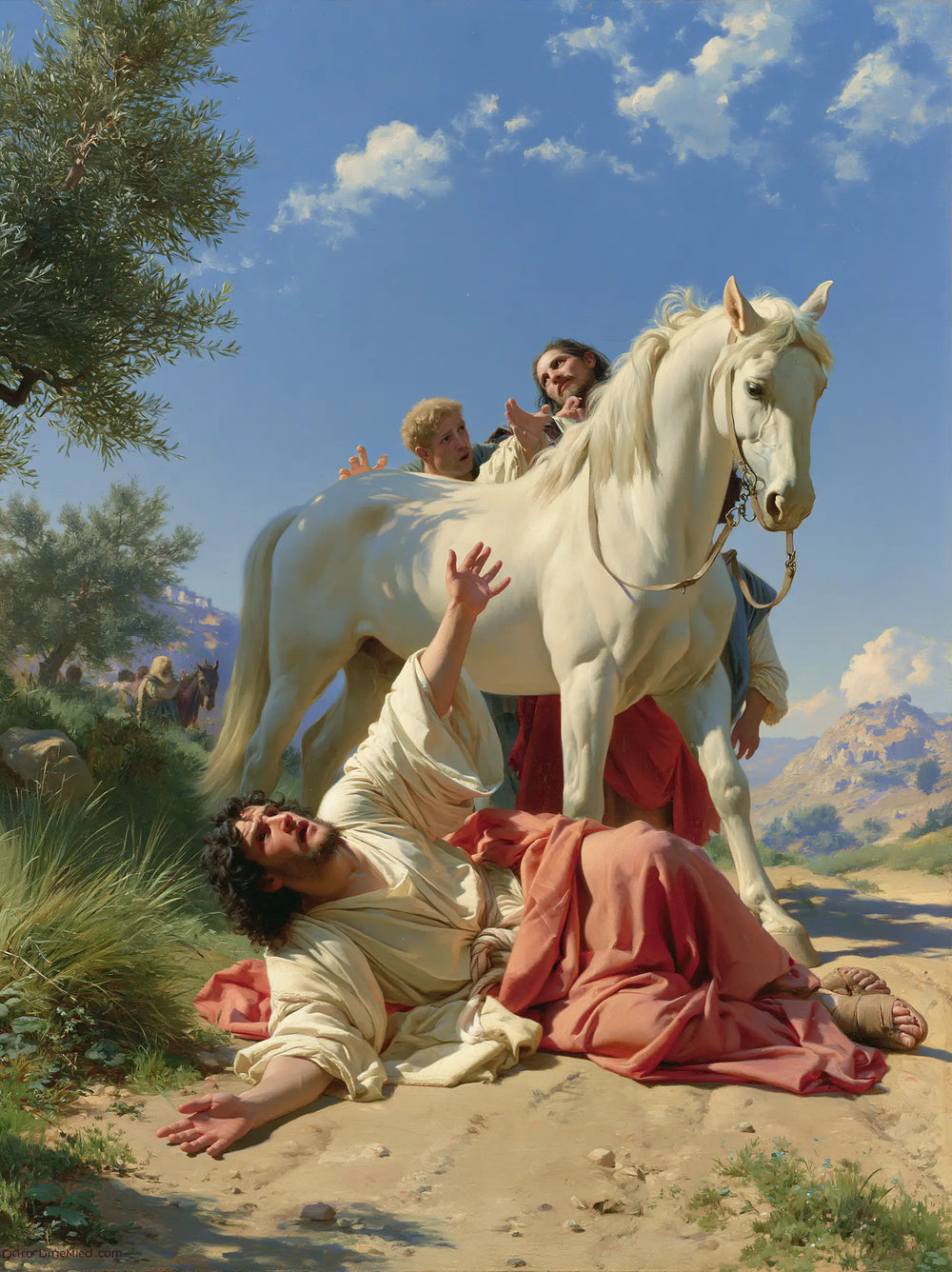
The cypress helps place the Damascus encounter in a landscape. The roadside motif gives the light a recognizable setting and makes it easier to see the event as an interruption in a journey. Compare the open setting with the close portraits.
View this art print → →7. The Book and Sword beneath the High Clouds
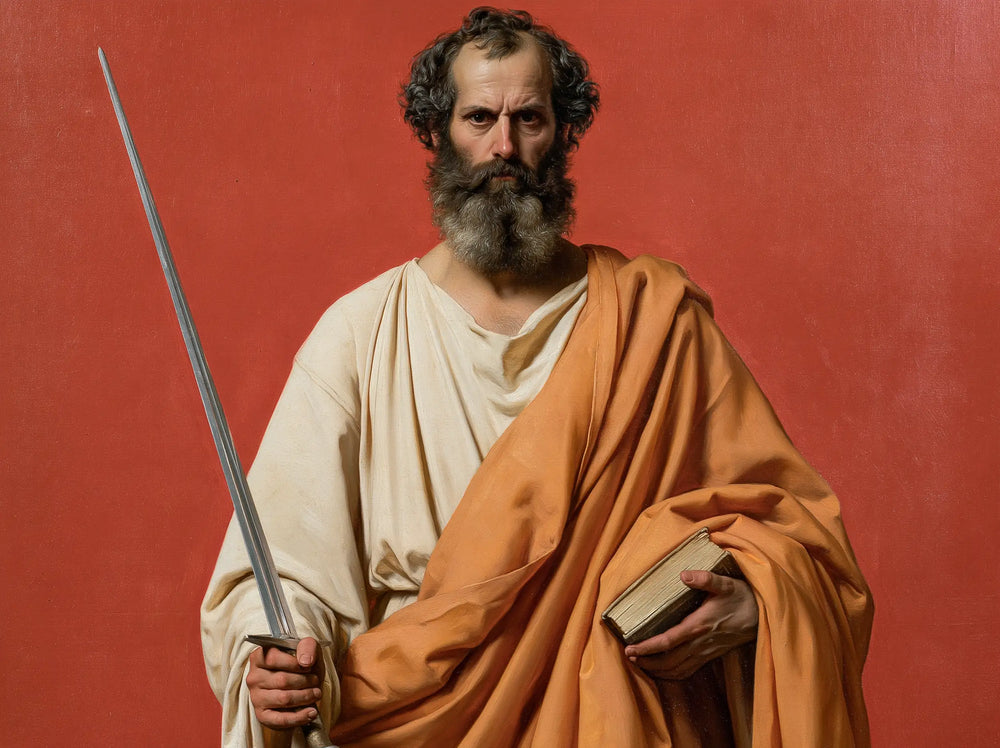
The two attributes appear together against an expansive sky. The book recalls Paul’s writings and the sword recalls his martyrdom in Christian tradition. This is a useful choice for someone who wants both associations in a single devotional image.
View this art print → →8. The Sword at the Temple Threshold
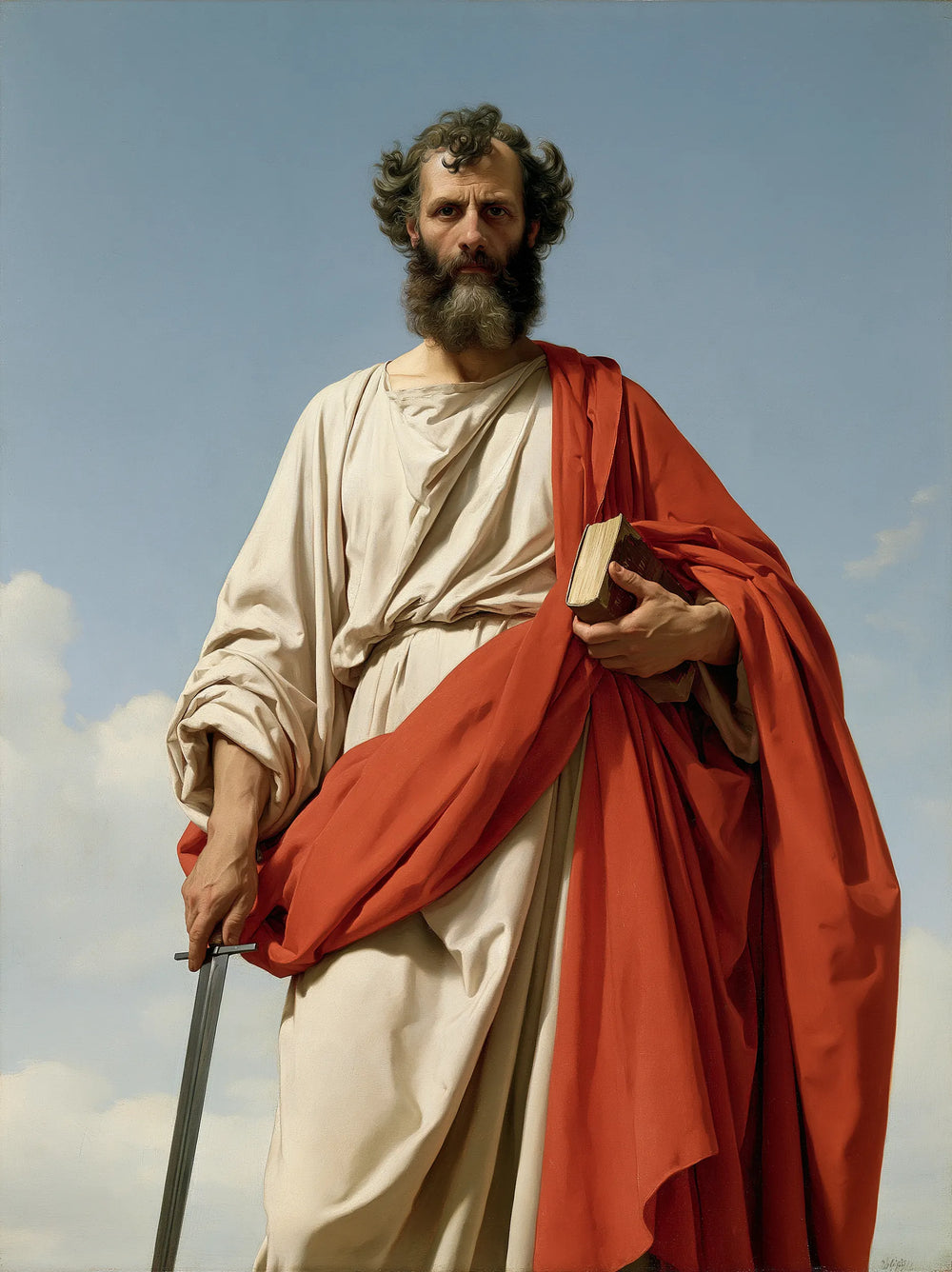
The architecture frames the figure and gives the emblem a formal setting. Notice how the threshold changes the relation between the viewer and the saint. Leave space around the print so the painted opening remains part of its effect.
View this art print → →9. The Fallen Apostle beside the Olive Tree
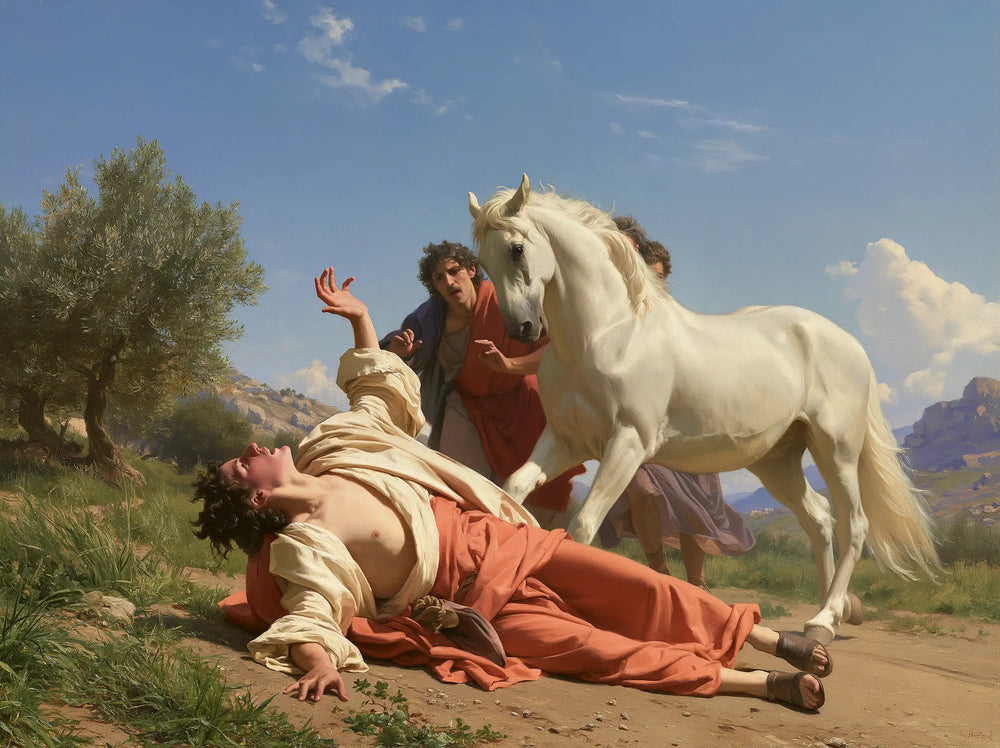
Paul’s lowered position brings the story close to the ground. The tree makes an ordinary setting hold a sudden encounter. This is a good comparison with the cypress scene if you are deciding how much atmosphere you want around the central figure.
View this art print → →10. The Silver Blade on the Vermilion Field
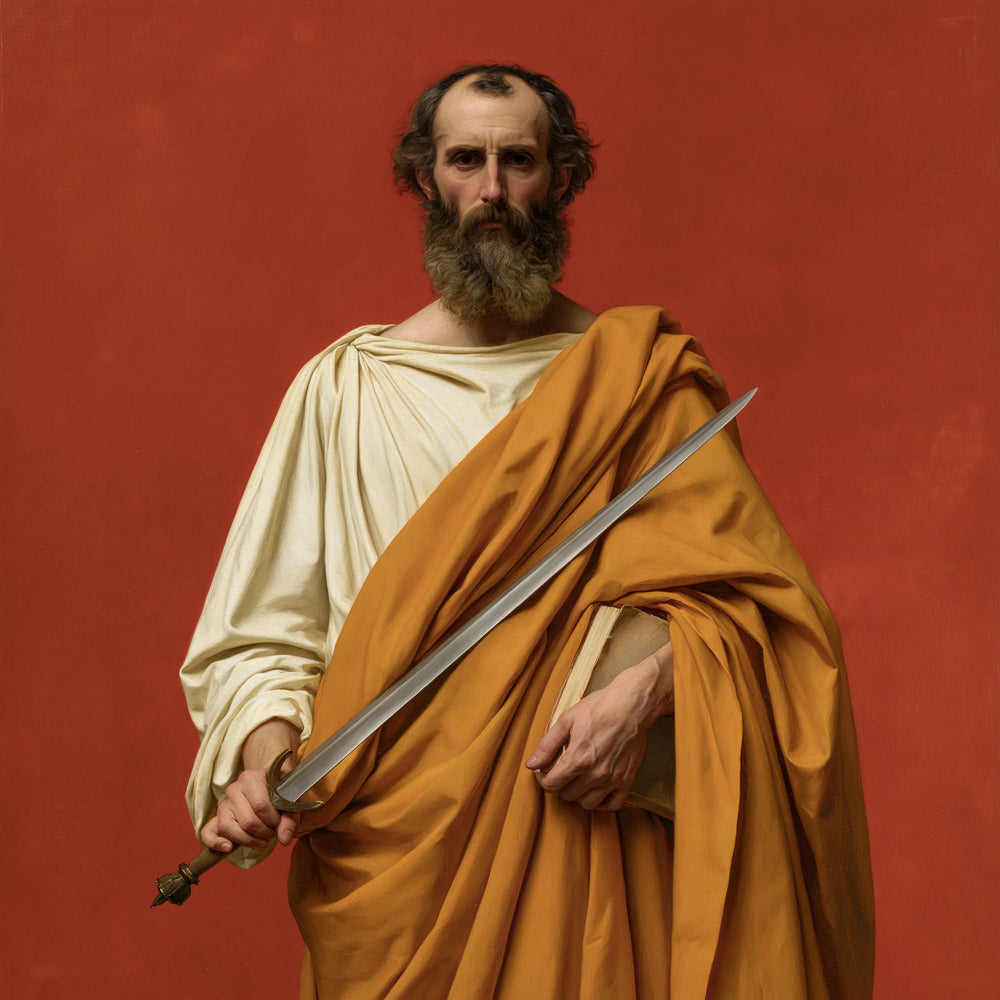
Vermilion gives this image strong color presence. The cool blade offers a crisp accent against it. Consider a plain frame and nearby colors that let the red ground stand out without crowding the wall.
View this art print → →Choosing a print for your space
For a large wall, a road scene gives the sky and the traveler room to establish distance. In a smaller prayer corner, choose a portrait in which the face or letter is clear from where you sit. If you intend to pair Paul with an image of Saint Peter, give the two prints related frames and let their attributes do the work: Paul’s book or sword and Peter’s keys.
Further reading
- Acts 9 · Saul’s encounter on the road
- Acts 19 · Paul at Ephesus
- Explore the corresponding Saint Peter guide