

In these ten contemporary works created with AI, Christ is seen on palace steps, before Pilate, and in quiet close-up. The story stays recognizable as the atmosphere changes from an open blue sky to a crowded hall or a muted violet background. Start by asking where each picture places you in relation to the scene.
What does Ecce Homo mean?
Ecce Homo means “Behold the man.” In John 19:5, Pilate speaks those words as Jesus appears before the people. Pictures of the presentation often use a stair, doorway or balcony to separate Christ from the crowd. A close portrait can hold onto the memory of the scene through the crown, robe and bound hands.
Explore the ten works
- Pilate Faces Christ beneath the Blue Sky
- Pilate’s Gesture beneath the Palace Arches
- The Presentation upon the Marble Steps
- The Crown among the Witnesses
- Christ between the Accuser and the Spears
- Christ before the Shouting Hall
- The Bound Christ before the Scarlet Crowd
- Christ upon the Palace Step
- The Bound Hands against the Grey Wall
- The Upturned Gaze in Violet Shadow
1. Pilate Faces Christ beneath the Blue Sky
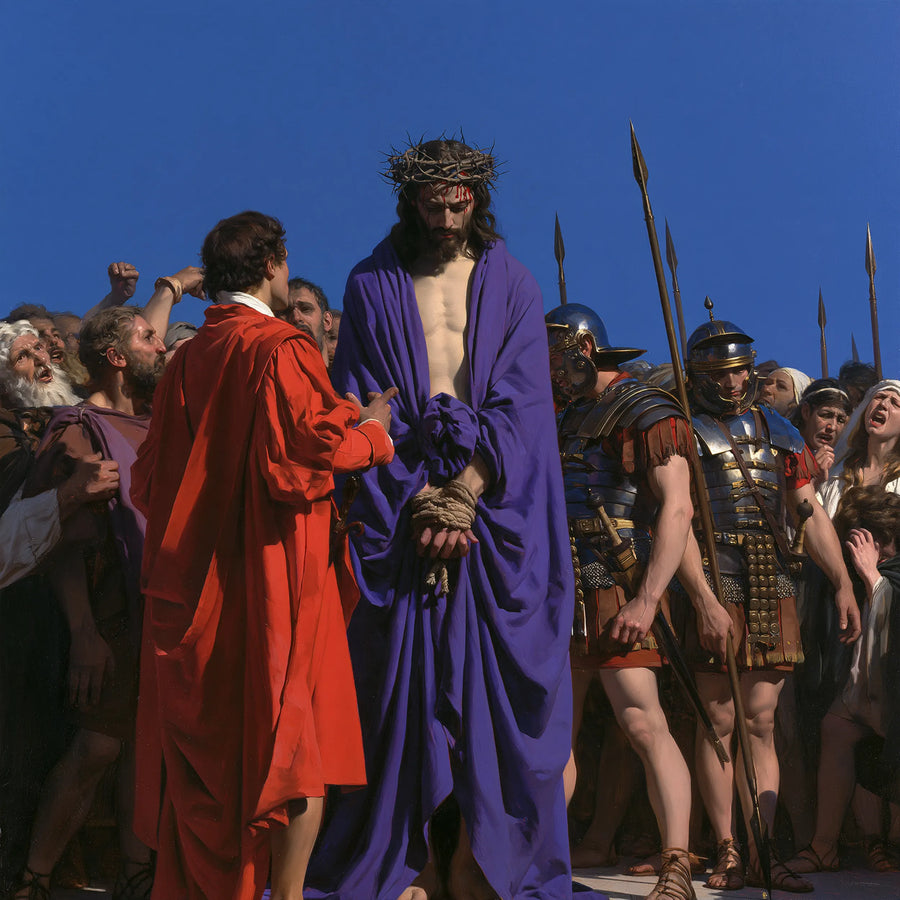
The open blue sky makes the meeting between Pilate and Christ more exposed. Look at the interval between them. A small amount of space can tell you as much as the expression on either face.
Choose your print format →2. Pilate’s Gesture beneath the Palace Arches
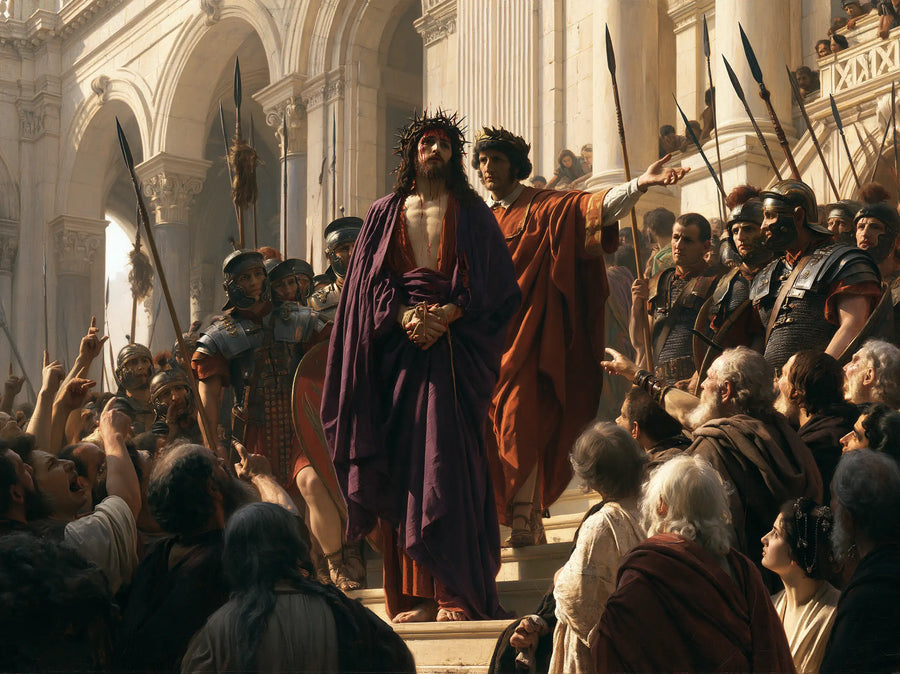
The arches organize the way you see Pilate’s gesture. Follow his arm first, then notice how the stone frames the figures and directs the gaze toward the space beyond them.
Choose your print format →3. The Presentation upon the Marble Steps
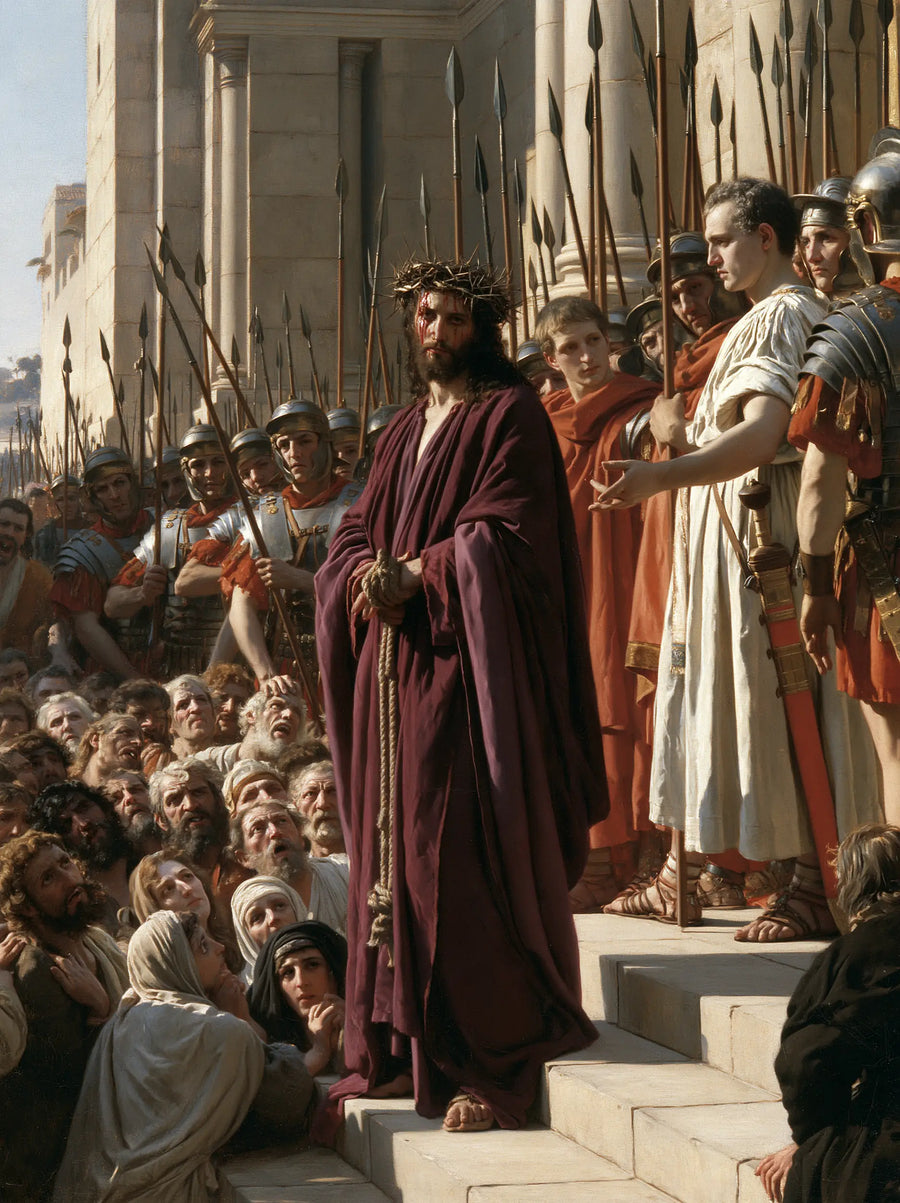
The steps separate the people being watched from those watching. Seen from several feet away, those clear levels keep the arrangement readable even when the individual faces are small.
Choose your print format →4. The Crown among the Witnesses

The crown helps identify Christ within a group that could otherwise pull the eye in several directions. Compare the witnesses’ lines of sight to see who looks at him and who looks outward.
Choose your print format →5. Christ between the Accuser and the Spears
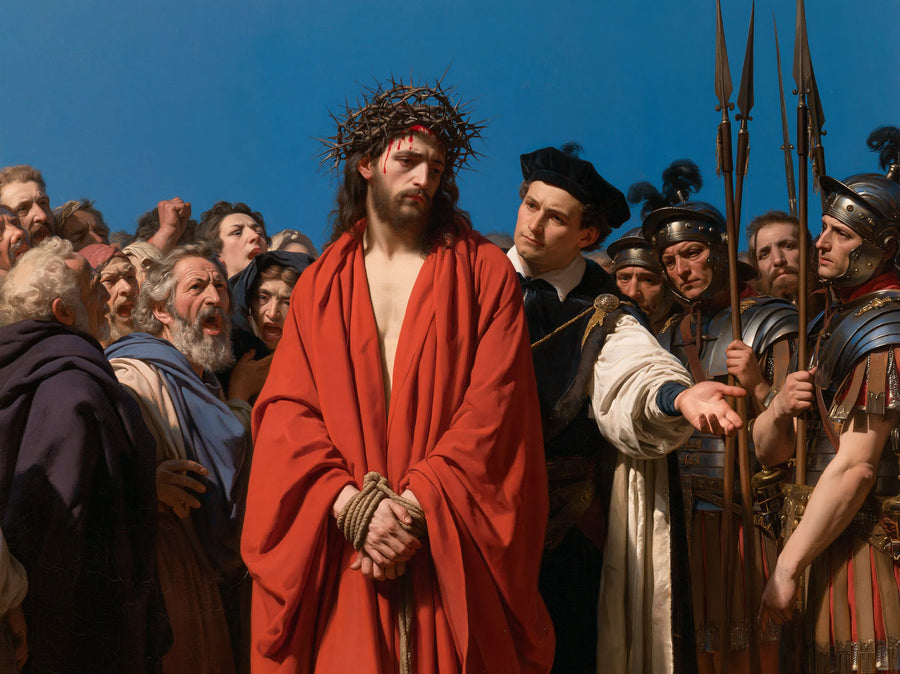
An accuser and upright spears give this scene a strong framework. Trace the taller lines first, then look for the posture that gives Christ’s figure its stillness. The distinction reads best if you leave the frame uncropped.
Choose your print format →6. Christ before the Shouting Hall
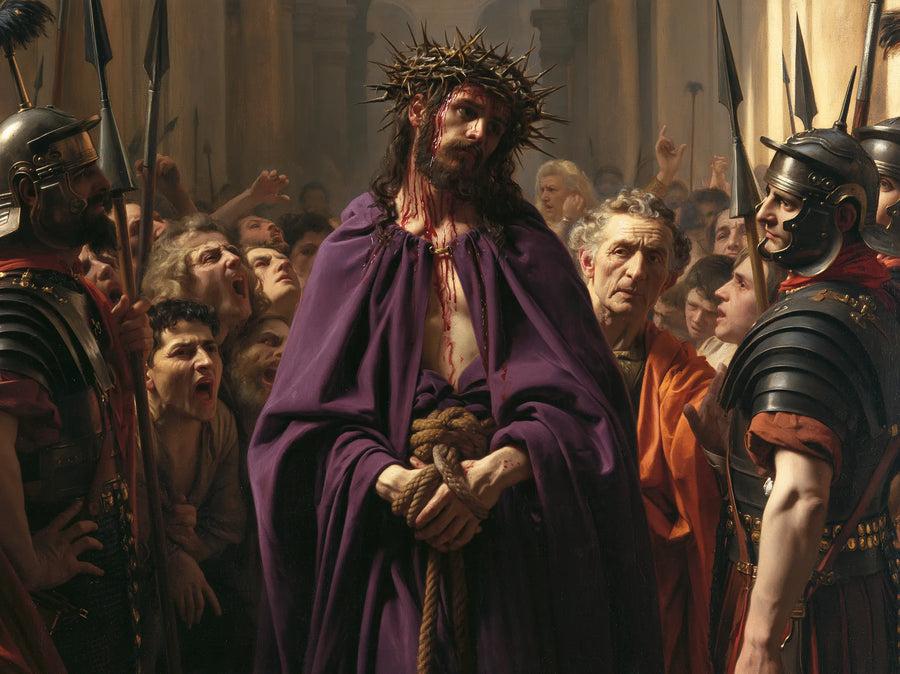
The hall gives the crowd a visual presence even away from its faces. Look for the change from space close to Christ to the wider space where the voices are implied.
Choose your print format →7. The Bound Christ before the Scarlet Crowd
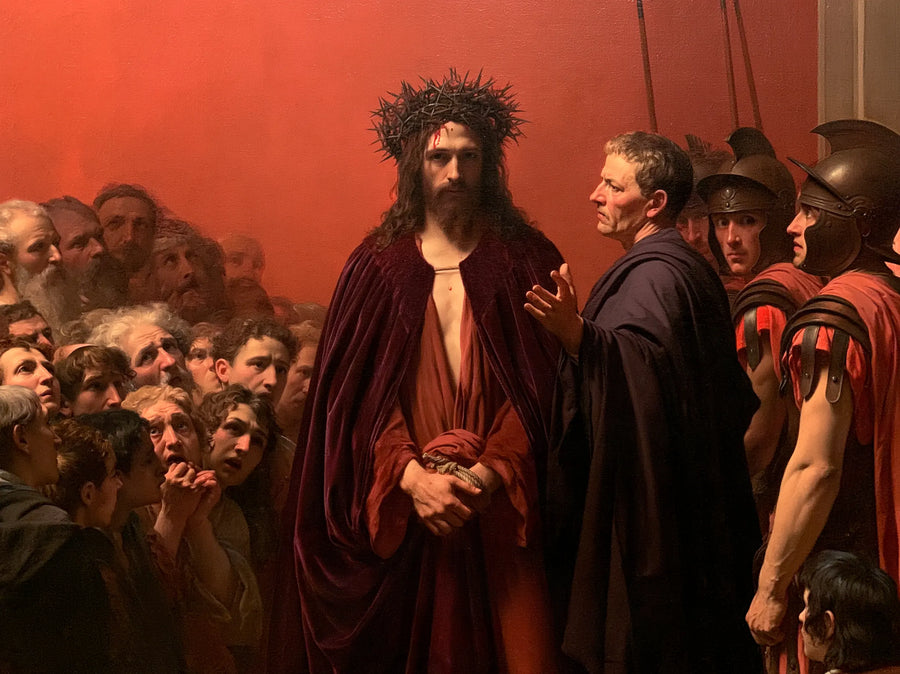
Scarlet makes the crowd part of the painting’s first impression. From across a room the mass of color reads before the smaller gestures. Up close, return to the bound figure to see how the composition holds him in view.
Choose your print format →8. Christ upon the Palace Step

The palace step makes the scene an act of public presentation. It places Christ on a visible threshold and gives the viewer a position in relation to those who have gathered.
Choose your print format →9. The Bound Hands against the Grey Wall
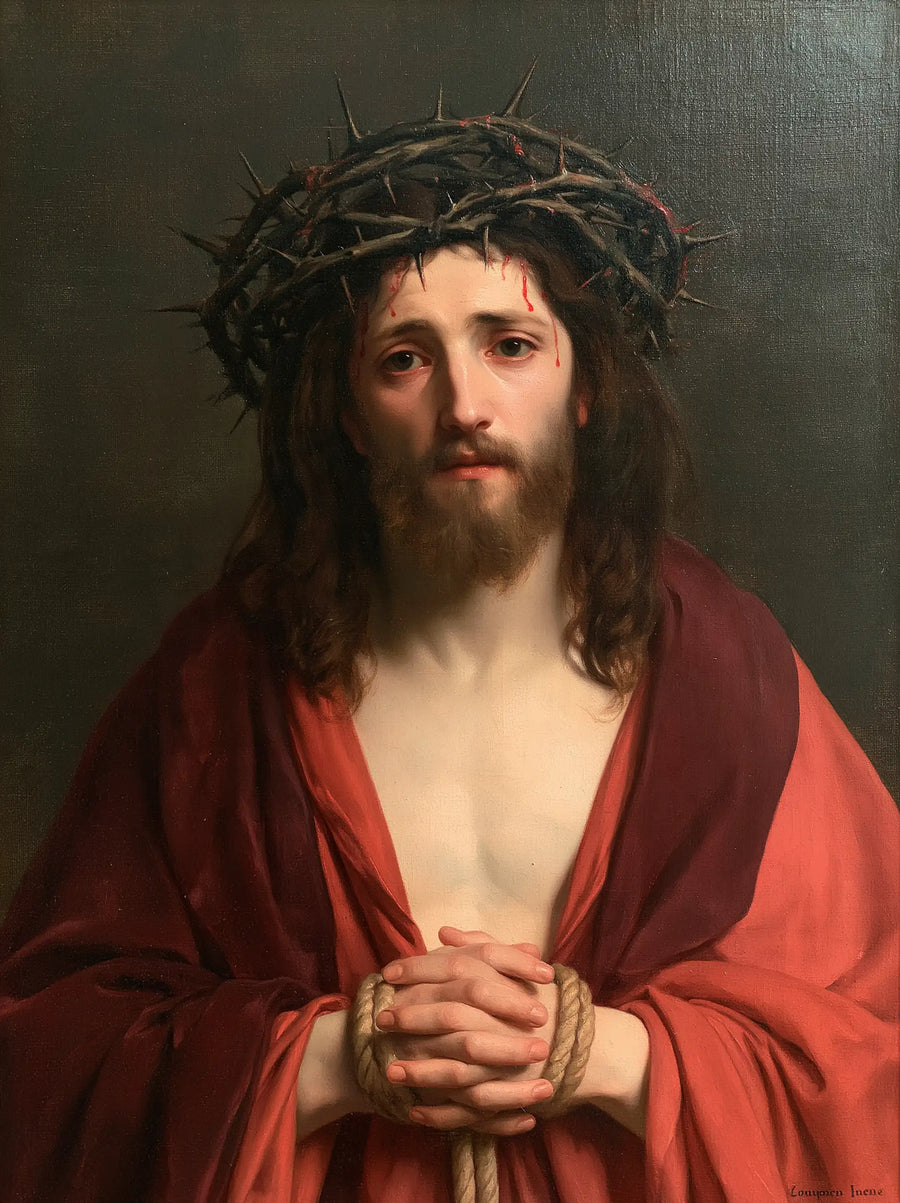
The gray wall and bound hands bring the image close. A modest format at eye level lets those small details make the subject legible without the wider crowd.
Choose your print format →10. The Upturned Gaze in Violet Shadow
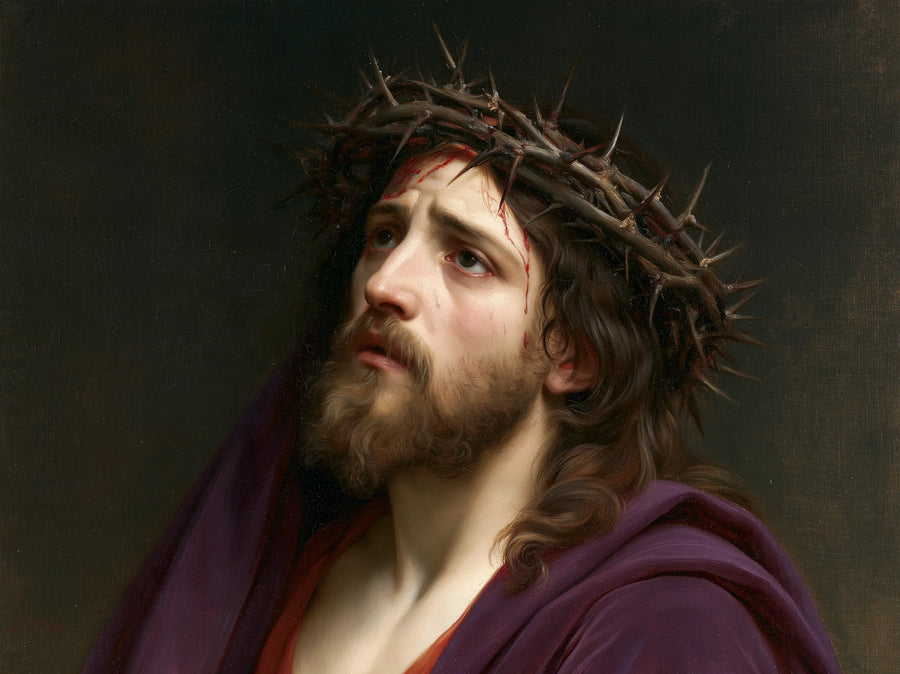
The lifted gaze is the main line of movement. Violet shadows leave room around the expression, giving the portrait a quieter pace than the crowded palace scenes.
Choose your print format →How to choose an Ecce Homo print
For a shared room, a scene with steps or arches can give the image a clear shape from several paces away. A quiet close-up works at a smaller scale. If you choose a dark composition, view it where soft light reaches the print. Matte fine art paper is well suited to a prayer corner where the image will be read up close.
Browse the Ecce Homo art collection →
Read about historical Ecce Homo paintings →
Explore the preceding episode in art, the Crowning with Thorns