

In the Divine Mercy image, Jesus raises one hand in blessing as two rays, one red and one pale, flow from his chest. These ten contemporary AI-created artworks by Alpha Christian Art explore that devotional image through different formats, palettes and settings.
The image comes from the devotion associated with Saint Faustina Kowalska. Eugeniusz Kazimirowski painted the first version in Vilnius in 1934. The Shrine of the Divine Mercy in Vilnius houses that painting today.
1. Golden Hour of Mercy

The wide format leaves room for the warmth surrounding the central figure. Compare it with the deep shadow of Blessing in the Night. The same gesture can read as an invitation across an open space or as a quiet encounter.
2. Amber Light of Trust

Amber is the dominant mood here. Watch for the distinction between warm light in the image as a whole and the two colors traditionally associated with the rays. A matte print can help subtle shifts in brightness remain legible in a softly lit room.
3. Rays Beneath a Stormlit Sky

The tall composition gives the changing sky its own space. Step back and see which catches your eye first, the brightness around Christ or the gesture of blessing. Both are cues for reading the image before attending to the details of the landscape.
4. Mercy From the Darkness
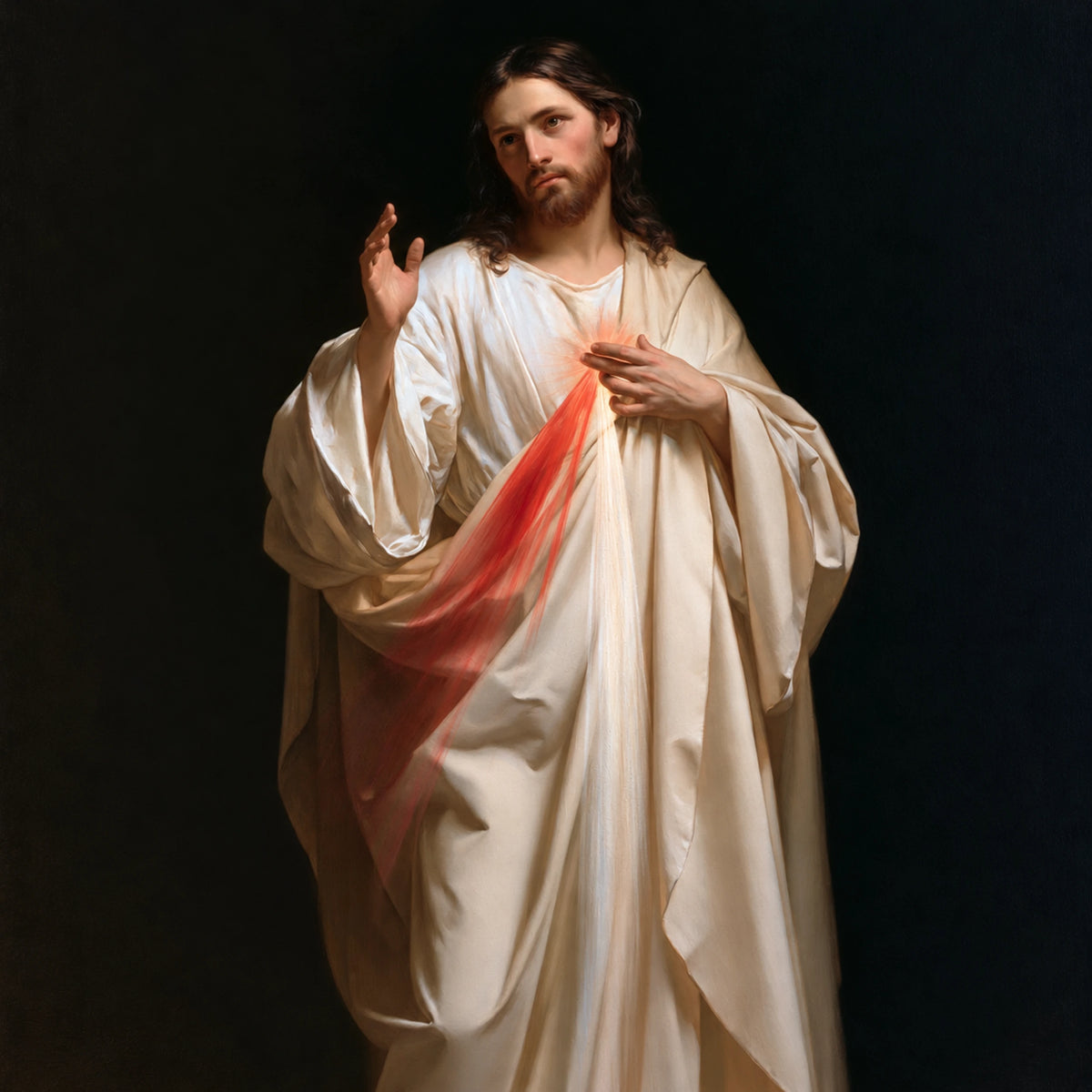
The square frame concentrates attention on Christ and the rays. Its darker tonality is especially suited to a well-lit wall, where the subtle transition from the shadows to the robe remains visible.
5. Blessing in the Night
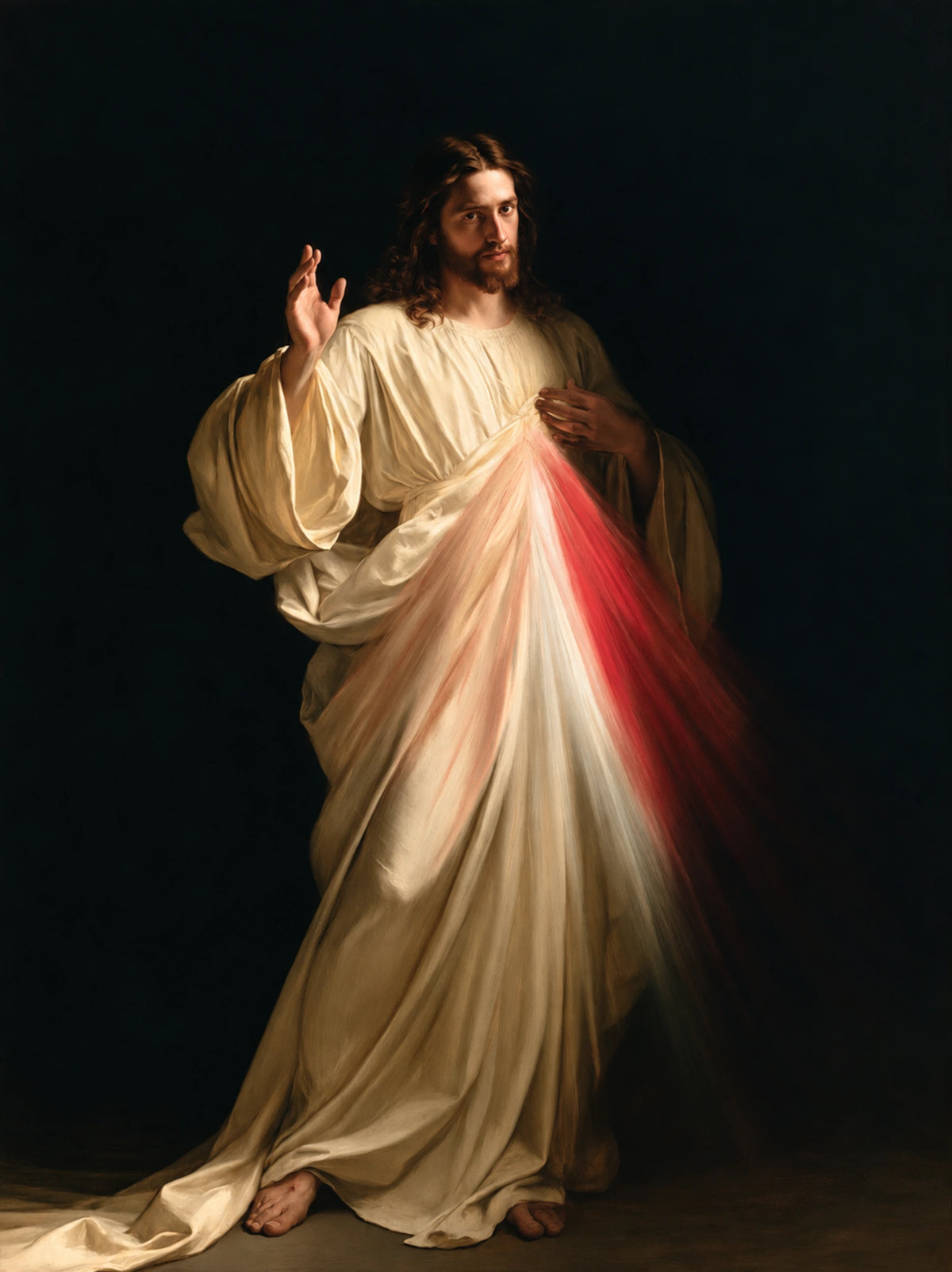
This vertical design asks the viewer to stay with a small range of light. The raised hand is the natural place to begin. Let your eye move from that gesture to the rays to see how the picture links blessing to the invitation to trust.
6. Quiet Blessing
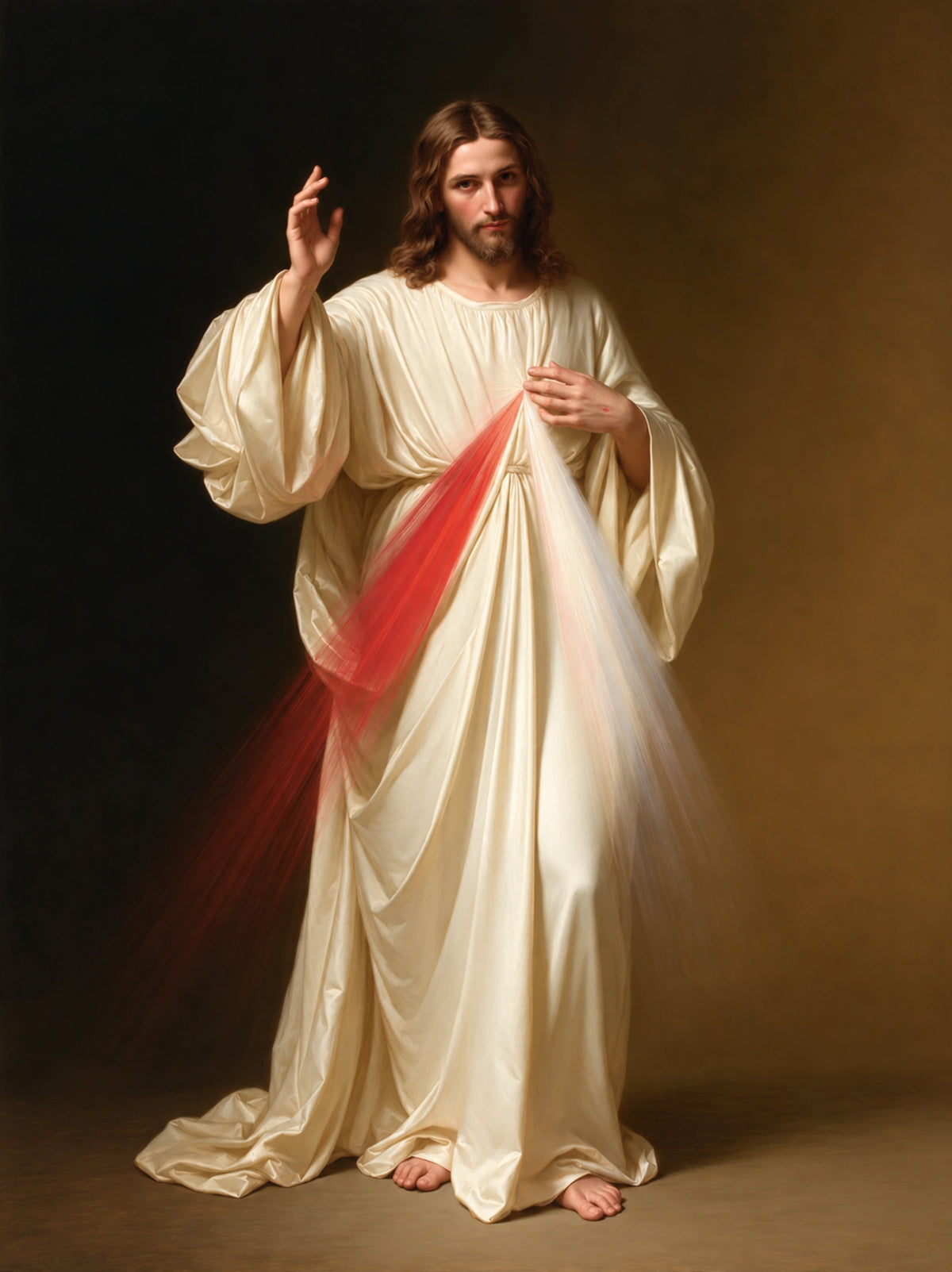
For a small prayer space, this vertical interpretation offers a quieter choice. Compare its restraint with the gold of Golden Welcome. The difference in atmosphere can matter as much as the size of the print.
7. Golden Welcome

Here the horizontal format allows the warm surrounding field to contribute to the sense of welcome. If you plan to hang the work over a console, leave enough space beside it for the full composition to breathe.
8. Promise at Dawn
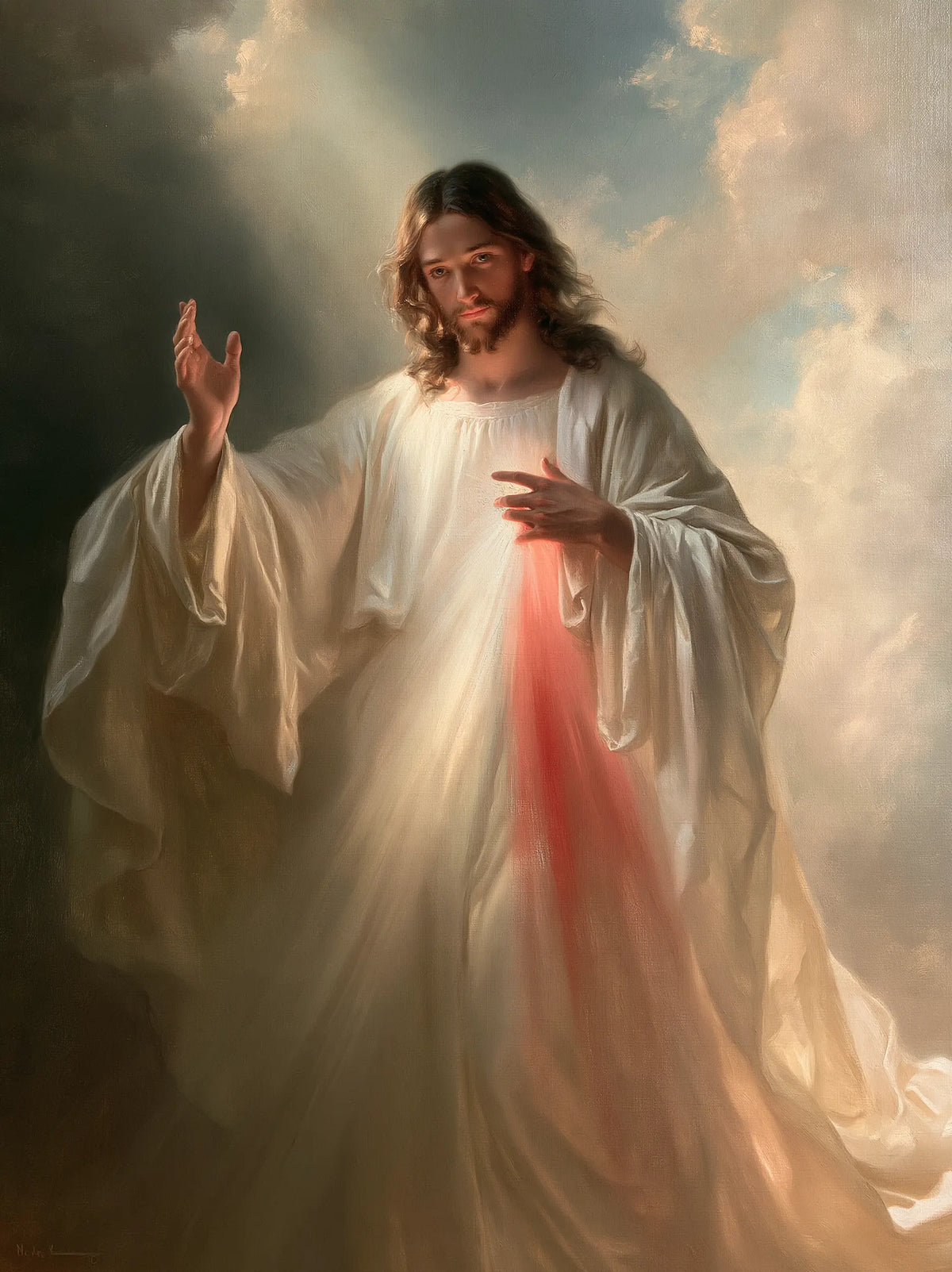
Dawn gives this print an association with beginning again. That association comes from the artist’s choice of setting. The devotional signs to look for remain Christ’s blessing and the rays from his chest.
9. Robes of Living Light

With its tall, narrow proportions, this work emphasizes the vertical flow of the robe. View it from across the room first, then at reading distance. The figure leads the eye downward toward the area where fabric and rays meet.
10. Mercy in the Morning Clouds
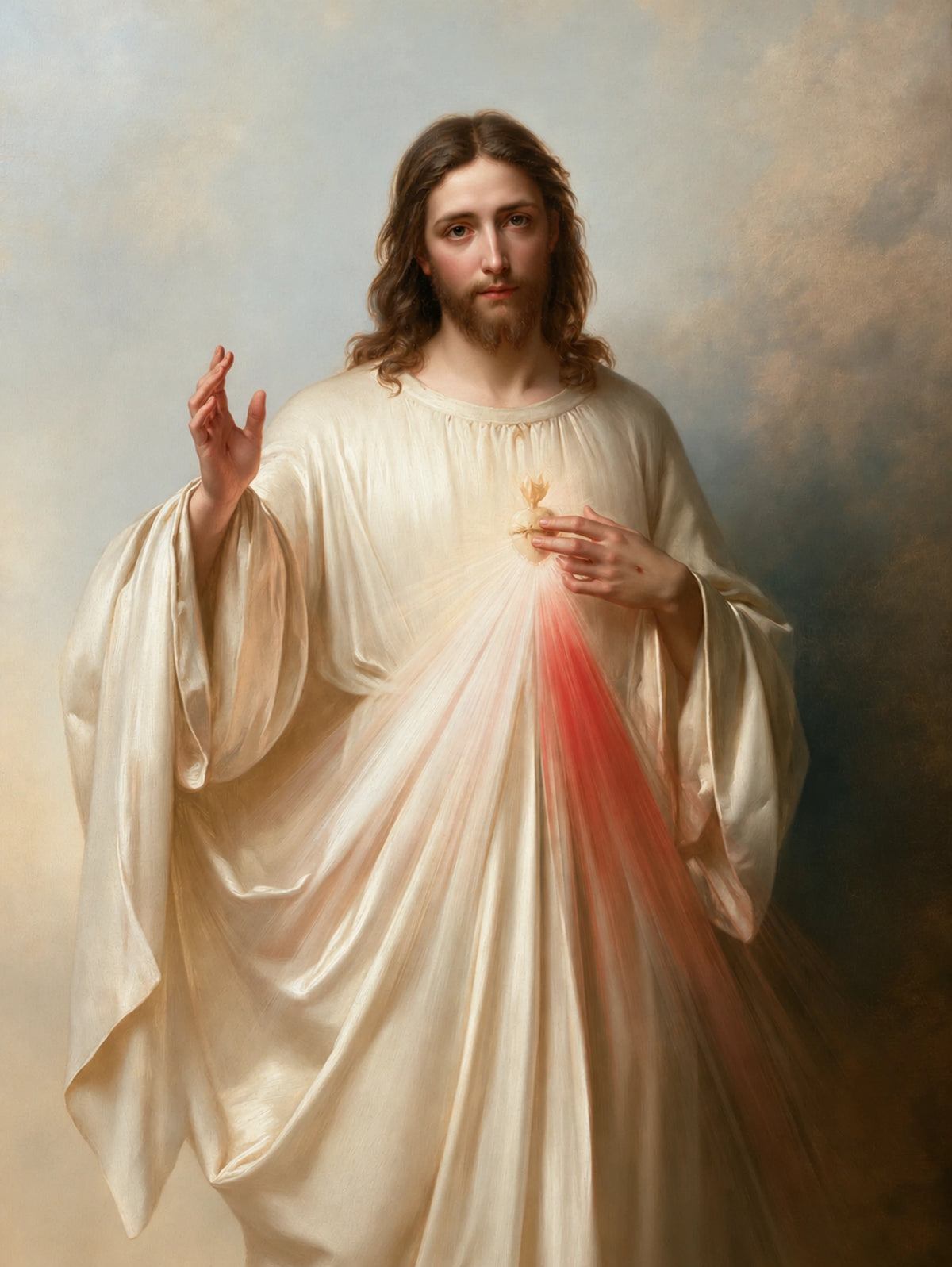
Clouds make morning light part of the scene. Compare this painting with the darker designs and notice how surrounding light affects the clarity of the rays. A vertical print can work beside a doorway or in a narrow alcove.
What do the two rays mean?
In Saint Faustina’s account, the pale ray signifies the water that makes souls righteous and the red ray signifies the blood that is the life of souls. The imagery recalls the blood and water from Christ’s pierced side in John 19:34. The words “Jesus, I trust in You” give the image its devotional focus. For the liturgical context, see the USCCB’s guide to Divine Mercy Sunday.
Choosing a print for your space
A tall portrait gives the blessing hand and the rays a clear path from top to bottom. A wider composition allows more room for the landscape or sky. If you plan to hang a darker version in a prayer corner, check the light at the time of day you normally use the space. Diffuse light helps keep the robe and rays visible together.